ealth Impact Assessment Division Steps onto the International Stage: Exchanging Experiences in Climate Change Policy and Health Governance
Department of Health Provides latest news and useful information for you.
On January 25, 2026, Dr. Jittima Rodsawad, Director of the Health Impact Assessment (HIA) Division, was invited as an expert speaker at the Prince Mahidol Award Conference 2026 (PMAC 2026). She participated in the Side Meeting titled "Strengthening Global Health Governance: An Integrated Approach for Climate Change Initiatives in Geopolitical Dynamics" at the Centara Grand & Bangkok Convention Centre at CentralWorld, Bangkok.
This Side Meeting was organized by the Asian Development Bank (ADB) in collaboration with leading international organizations, including the World Health Organization (WHO), the United Nations Development Programme (UNDP), the International Organization for Migration (IOM), the Japan International Cooperation Agency (JICA), the National University of Singapore (NUS), and the Ministry of Public Health (MOPH), Thailand. The objective was to share experiences and design global health governance mechanisms that link climate change response with shifting geopolitical dynamics.
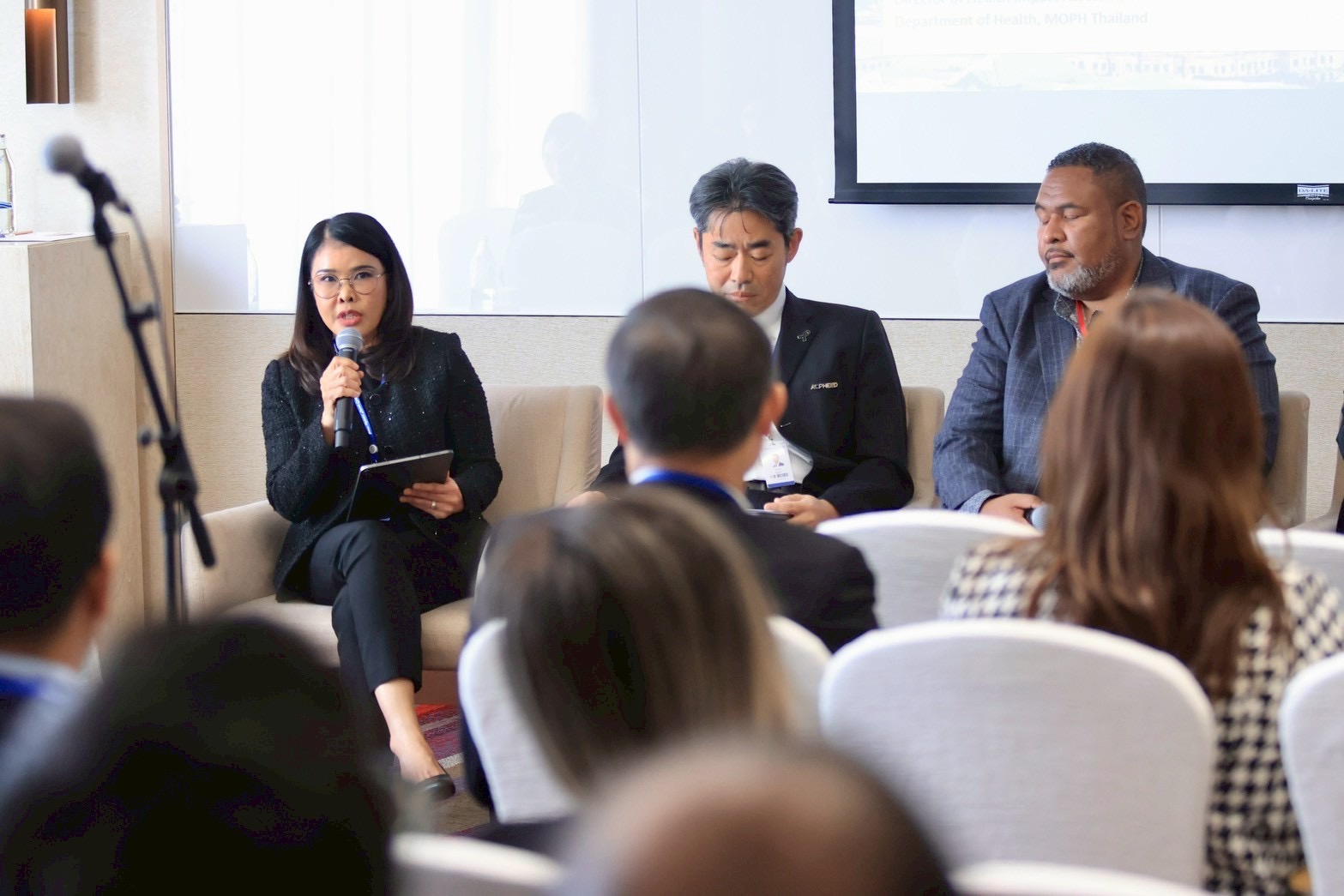
During the session, Dr. Jittima presented on the topic "Turning Climate Risk into Health Action: How Thailand Makes Its Health System Smarter", highlighted that Thailand faces high climate risks—including extreme heat, floods, and droughts—which impact public health, particularly for over 35 million vulnerable people, and strain the national healthcare system. Consequently, the Ministry of Public Health, through the Department of Health, is driving the Health National Adaptation Plan (HNAP 2021-2030) to elevate the healthcare system into a Climate-Smart Health System via four strategic pillars:
- Health Literacy: Enhancing public knowledge and skills to cope with climate-related health threats.
- Networking for Capacity Building: Integrating cooperation across all sectors to drive public health and climate initiatives.
- Advocacy for Commitment: Pushing for policy implementation and preparedness to support economic and social security.
- Public Health Preparedness: Strengthening emergency response systems to meet international public health standards.

While exchanging policy-level perspectives with representatives from international organizations, the Director of the HIA Division emphasized the importance of using risk data in decision-making and routine planning (Routine Governance). This approach aims to transition from short-term, project-based work to building a resilient and equitable health system that can sustainably protect the population amidst the global climate crisis.


